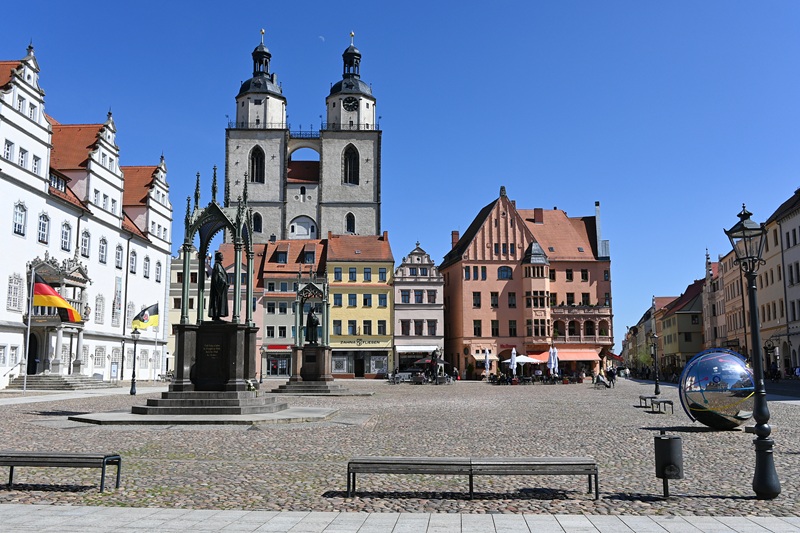
If you are looking for a very local travel experience, a quaint town packed with history and art, then a day trip from Berlin to Wittenberg should be on your bucket list. My free travel guide covers a full day itinerary including 10 things to do in Wittenberg Germany.
Wittenberg, often called Lutherstadt Wittenberg in Germany, was the religious centre in the 16th century, when Martin Luther translated the Bible, shared his 95 Theses, and caused a split from the Catholic Church in Rome, leading to the formation of the Evangelical Lutheran Church. Today, Luther is buried at the Schlosskirche, one of the town’s most important landmarks.
Wittenberg was also home to the renowned artist Lucas Cranach the Elder, a close friend of Luther. From his house at Markt 5 and his workshop at Schlossstraße 1, Cranach produced woodprints, altarpieces, and portraits that supported and spread the ideas of the Reformation. His influence extended beyond art, as he helped bring prosperity to Wittenberg by establishing several businesses, including a pharmacy and a printing workshop.
Despite its major historical importance, Wittenberg is still very small by German standards, with a population of only around 45,000 people, which is why you can experience so much of its heritage on foot in just one day. Here are my 10 things to do in Wittenberg Germany, along with a full-day itinerary to help you make the most out of your visit. Enjoy!
Please note: All institutions featured in my post have been approached and granted permission for the use of my images. All of my photos are approved by the respective institutions, ensuring that no copyright is infringed. When creating content in Germany, it is important to seek official approval before publishing, as strict copyright laws apply and proper permissions help you avoid potential legal issues or fines.
Wittenberg Germany Travel Guide: Travel Insights
My free Wittenberg in Germany travel guide comes with some extra insights for your consideration:
- Find the Tourist Information either at Stadthaus, brand new and adjacent to Klosterkirche (Mauerstraße 18) or opposite Schlosskirche, which is more traditional.
- Most of your budget will be spent on transport to Wittenberg.
- Whilst ticket fees are moderate, food is on the higher end budget-wise.
- Wittenberg is small and easily walkable.
- Free parking at Kurfürstenring if you arrive by car.
- Wittenberg has a small shopping mall called Arsenal.
- Opening times can exclude Mondays, so always check before going.
- The best travel time to go to Lutherstadt Wittenberg is during the week.
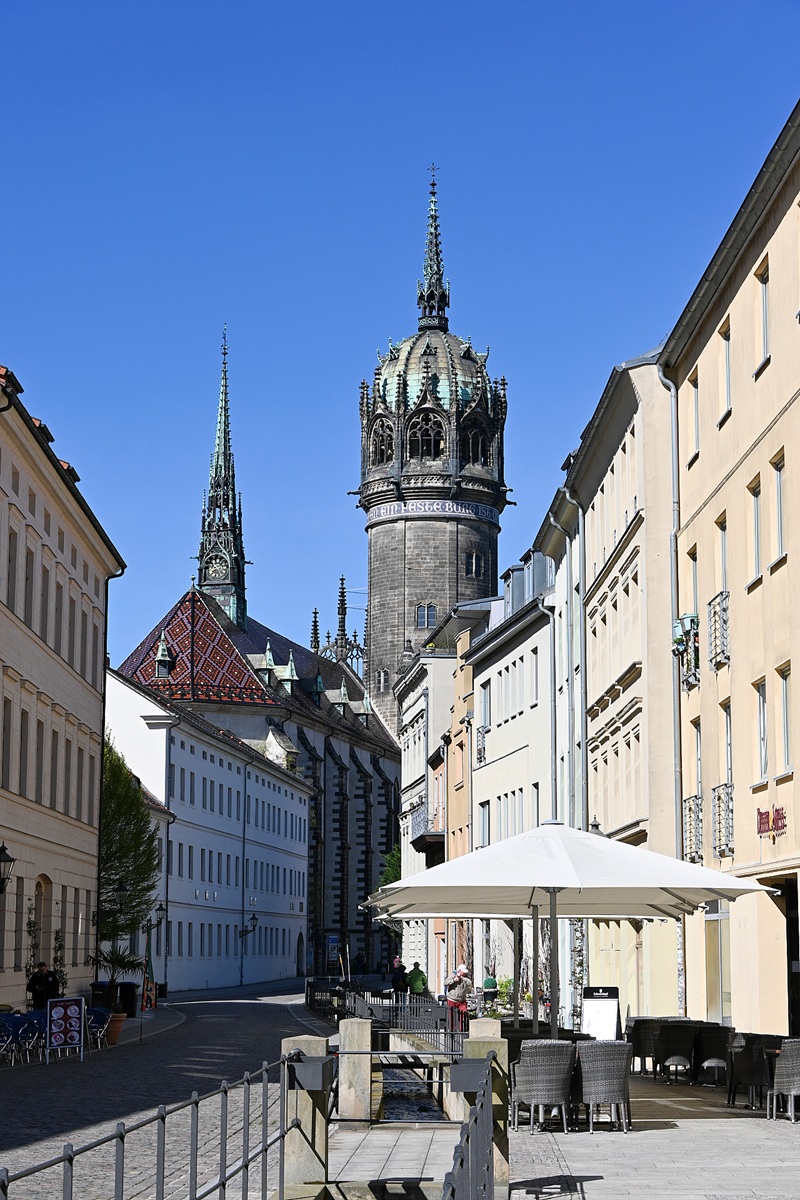
How to get to Lutherstadt Wittenberg in Germany
By train: from Berlin central station (ground level usually platform 3 or 4) there are direct connections to Wittenberg. The journey is just 1h. Several ICE services run every hour. When booked in advance, a one way ticket will be around 25€. Check the official DB website for real time departures and planning.
TOP TIP: when you travel in Germany and consider taking the train, always rely on the official DB website instead of Google Maps. The DB website is the most accurate in terms of travel planning.
By car: the distance from Berlin to Wittenberg is approximately 115km, travelling mostly on A115 and then A9. There is free all day parking in Wittenberg at Kurfürstenring.
10 Things to do in Wittenberg Germany
Here is a full day trip planned out for you with 10 things to do in Wittenberg Germany, from the moment you arrive in the morning through lunch and into the late afternoon. Before your visit, make sure to check all opening hours to avoid disappointment, and pin everything in your Google Maps so you don’t get lost.
Stroll through Luthergarten – Free Activity
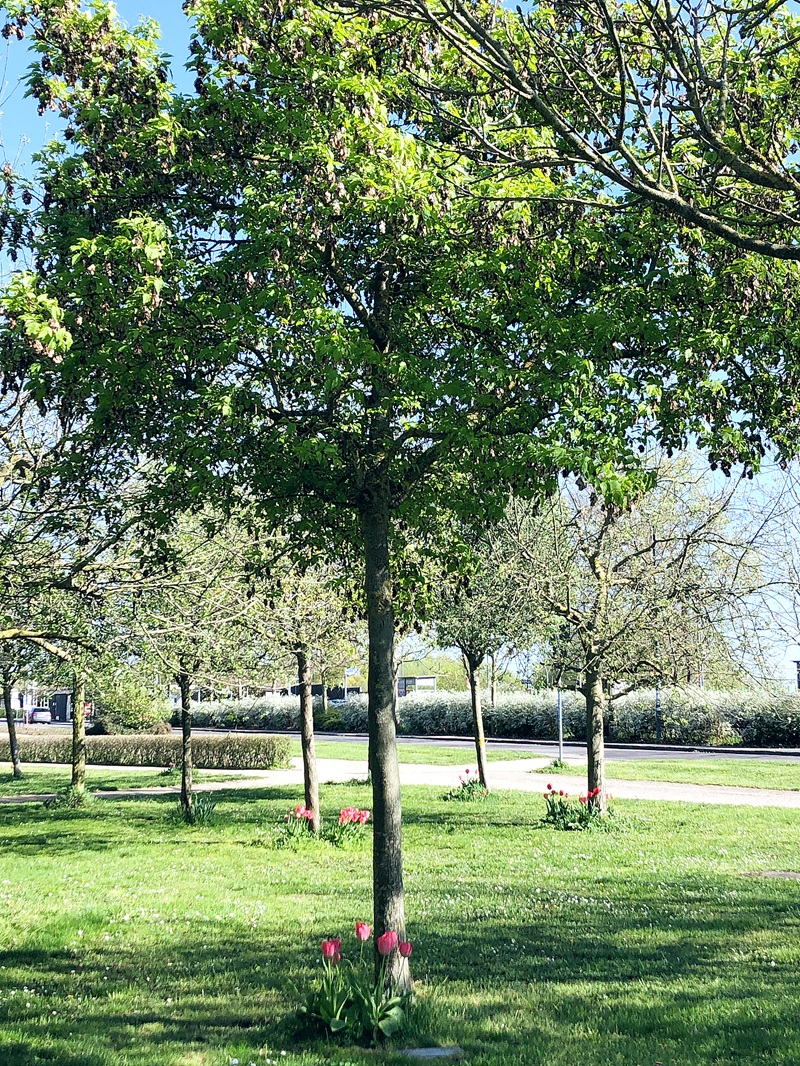
Upon arrival, have a stroll in the tranquil Luthergarten. Here, and along the path of the former city wall, are 500 trees planted by representatives of the Evangelical Lutheran Churches from across the world. Each tree has a commemorative plaque, and you can look up specific trees online in their database. For me, this was a great first experience, as it shows that the religious ties to Wittenberg exist worldwide. Walking among the trees and reading the plaques with curiosity, I spotted et alia Riga, Tallinn, Hanover, and Amsterdam.
Schlosskirche – Imposing Landmark
The Schlosskirche, erected around 1489, is one of Wittenberg’s most imposing landmarks. Its main feature is the tower, which can also be climbed. The Schlosskirche is next to the Stadtkirche, another UNESCO-listed site, and is the resting place of Luther and Melanchthon. The church is not only impressive from the outside but also from the inside. There is the church itself, followed by an informative exhibition on Luther, the Reformation, and Wittenberg as a religious centre in Germany.
You also have the chance to climb the nearly 300 steps of the tower to enjoy 360-degree views over the market town. The views are spectacular, and I highly recommend making the ascent. Note that there is a safety net, which can restrict photography, but other than that, the platform is spacious and well maintained.
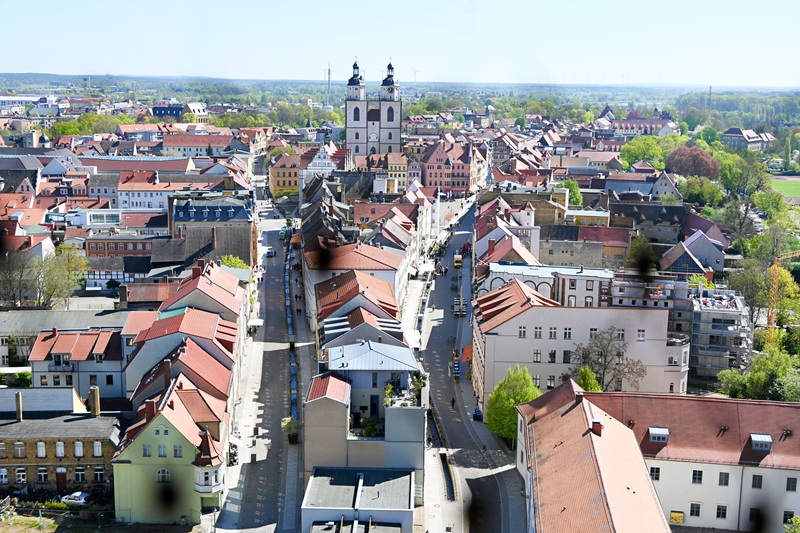
Wittenberg was heavily affected by fires and war damage over the centuries, especially during the Seven Years’ War. Much of what looks “original” today is actually a carefully reconstructed historic centre, particularly from restoration efforts in the 19th and 20th centuries.
When you descend and leave, take note of the 95 Theses on the right-hand side of the church. Luther nailed them to a wooden door on 31 October 1517, a date internationally known as Halloween but which holds significance as Reformation Day for many Germans, especially in the eastern regions of the country. The door burned down in 1760 but was replaced with a bronze replica 100 years later.
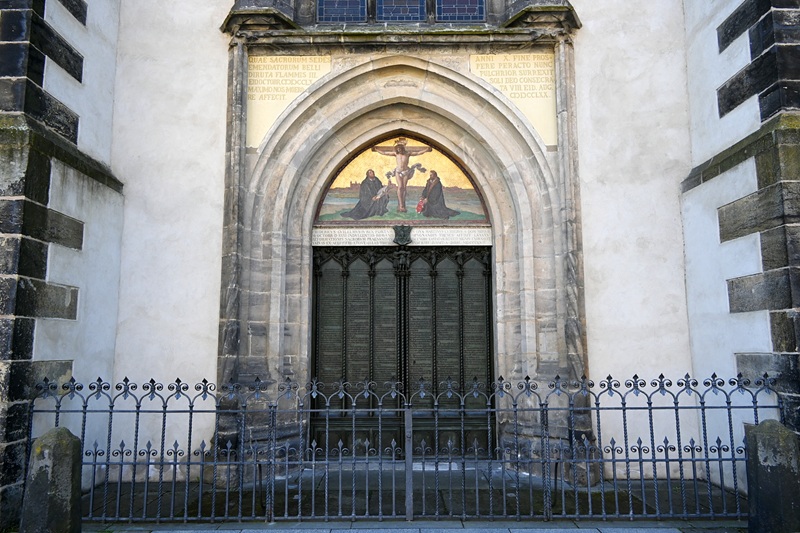
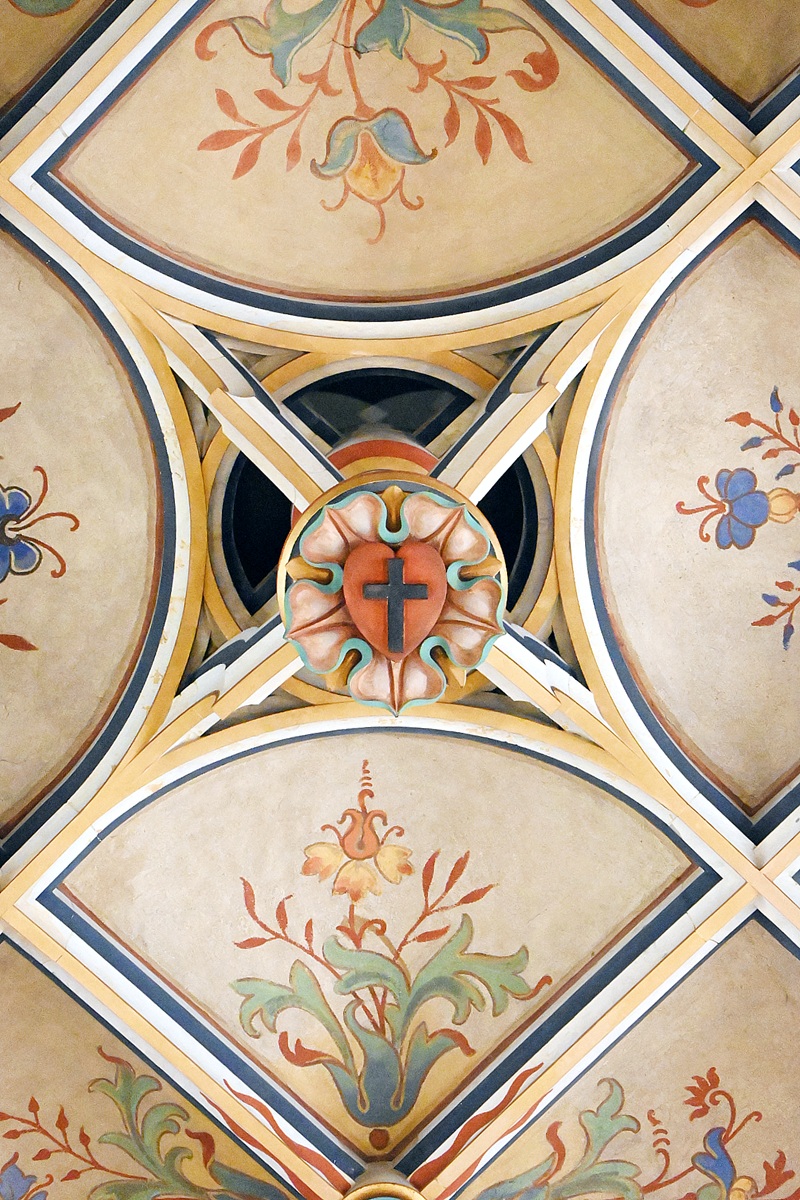
Keep in mind: even though Wittenberg’s churches are supported by UNESCO, they will still ask for a donation and small entrance fee for your visit. Both churches, Schlosskirche and Stadtkirche, can be covered with a combi ticket 5€ and the tower climb for an additional 3€.
The Old Town – Cobbled Streets, Architecture and Courtyards
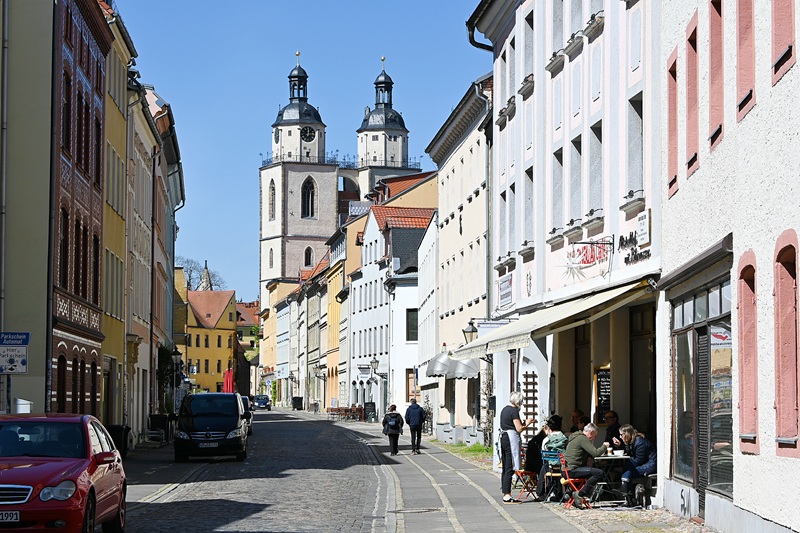
A stroll through the medieval core of the Old Town is not just charming but very German. Notice the quaint market square and well-preserved houses. Can you believe that most of these were only renovated in the past 30 years? Many of the pastel façades in the Old Town are not original colours but carefully researched restoration choices meant to reflect Renaissance-era palettes.
There are small cafés and ice cream parlours, as well as niche squares and even a Camino way marker. The cobblestones in parts of the city are not just decorative. Some streets still follow the exact medieval street grid from when Wittenberg was first fortified. Following the main streets will lead you conveniently down Collegienstraße, where you will find the Melanchthon House, the university Leucorea, and Luther House. Take a stroll back via Mittelstraße and Coswiger Straße and stop for lunch.
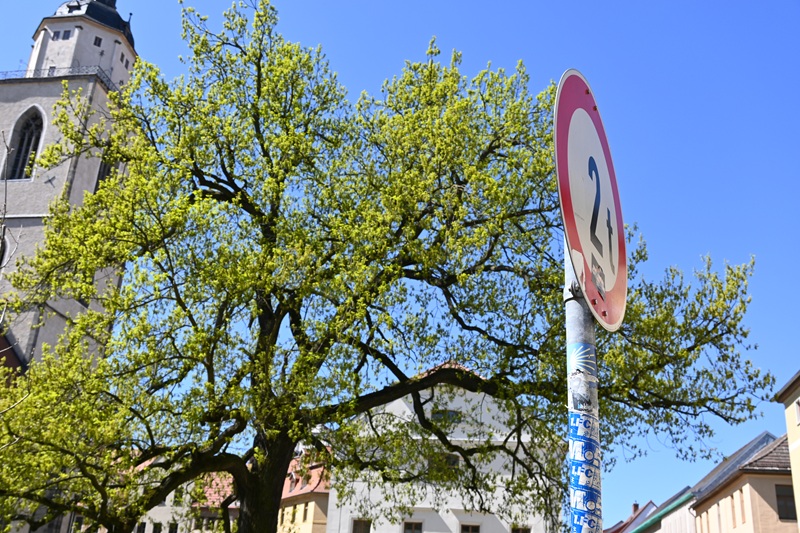
You’ll notice small open water channels running through parts of the Old Town, a quiet reminder of the city’s historic water management system. These streams were originally part of a medieval drainage network, helping to regulate water from the nearby Elbe floodplain. Today, they are preserved as part of the streetscape, adding a surprisingly peaceful and atmospheric detail to the historic centre.
Lunch – Suggestion Restaurant “Taj Mahal”
It’s time for lunch, and Wittenberg has a small but varied food scene. You’ll find traditional German restaurants like Carpe Diem, American options like Wittenburger, Italian such as Trattoria Toscana, Mexican at Los Torreros, and Asian at Coswiger 4. There is also a really nice Indian restaurant.
I do have a weak spot for Indian food, and especially in Germany, you will often find Paneer Pakora, Indian cheese deep-fried in chickpea flour, widely on the menu. So order this as a starter and then go with any of the familiar curries such as Chicken Tikka, butter chicken, or Rogan Josh. Unlike in anglophone countries, Indian restaurants across Europe often charge one price for their curries and include a small salad and rice. In most cases, you do not have to order rice or bread separately.

Stadtkirche – The Original Church of Luther’s Reformation
You can’t miss the city church with its two high-rise towers as soon as you walk from Luthergarten up into the town and step into the market square. This church belongs to the UNESCO World Heritage sites and was Luther’s main church, where he held sermons from 1512 onwards.
The church, first mentioned around 1180, is also home to the largest Cranach art collection in the world. The main piece is the three-windowed altarpiece from 1547/48, showing reformers Melanchthon and Bugenhagen, with Luther seated in the centre in a replicated scene of the Last Supper.

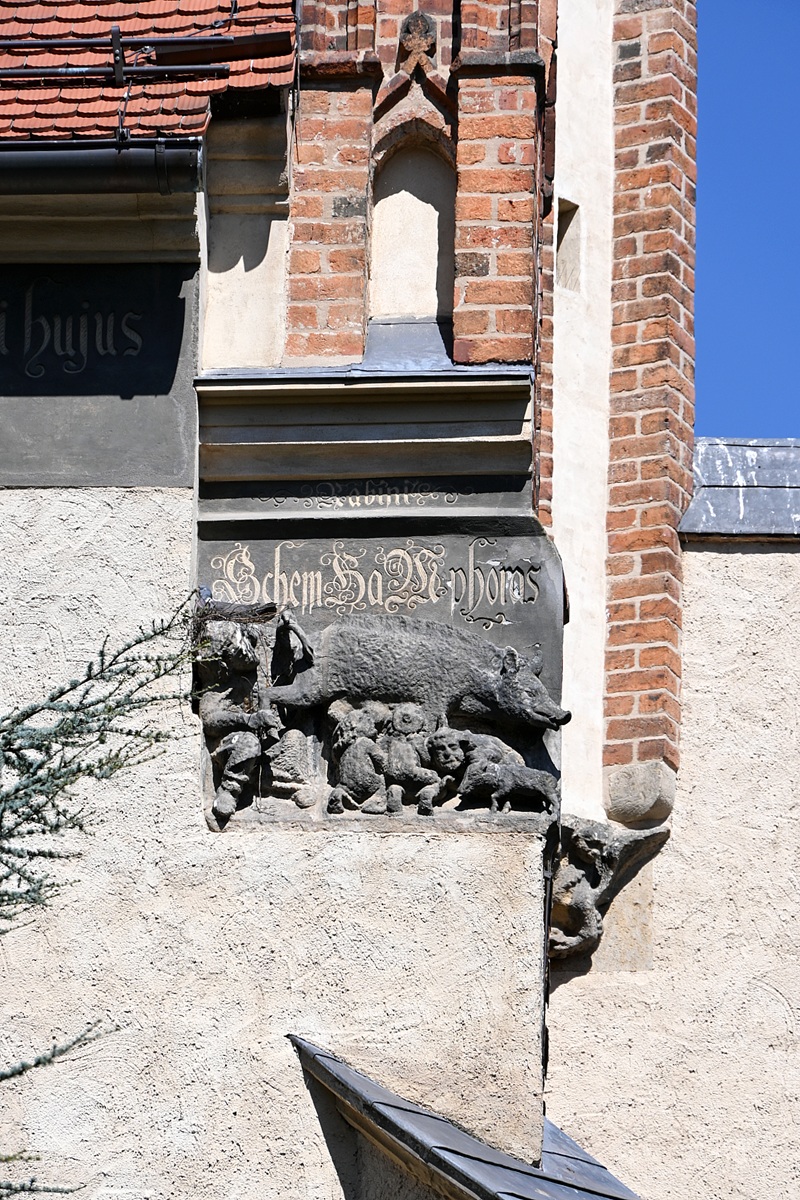
Another, more controversial feature of the church is the so-called “Judensau” relief on the south wall of the building. Look high up along the exterior to spot it. This medieval carving depicts antisemitic imagery associating Jews with a pig and has been the subject of ongoing public debate and legal challenges in recent years, including a 2020 German court ruling. Today, it is presented alongside a modern memorial plaque condemning antisemitism and providing historical context for the sculpture’s discriminatory message.
Did You Know? Luther’s first translation, the so-called “September Testament,” was illustrated by Cranach. Unfortunately, you cannot buy a modern copy of it. Only collector’s editions exist, and today’s illustrated Luther Bibles are often accompanied by works from other artists.
Coffee Break – Kaffee & Kuchen
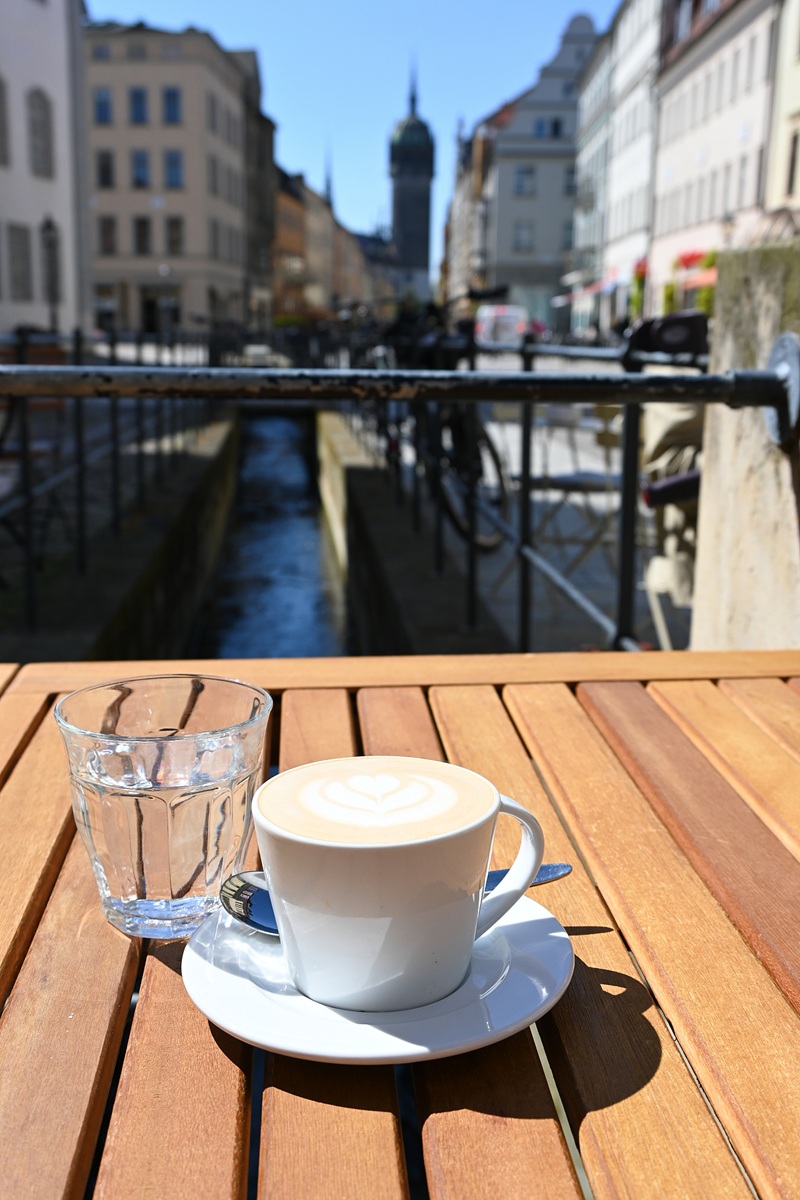
Nothing is more sacred in Germany than the 3pm Kaffee und Kuchen break, and you’ll get your fix at the roastery “Röstbursche”. This independent café, run by Paul, has been operating for just a year (since March 2025), bringing quality coffee to Wittenberg. It is a small café but especially delightful in the summer, as you can sit in the pedestrian area and watch local life go by, with water running serenely through the nearby streams.
Cranach Museum – Home to the Renowned Artist Family
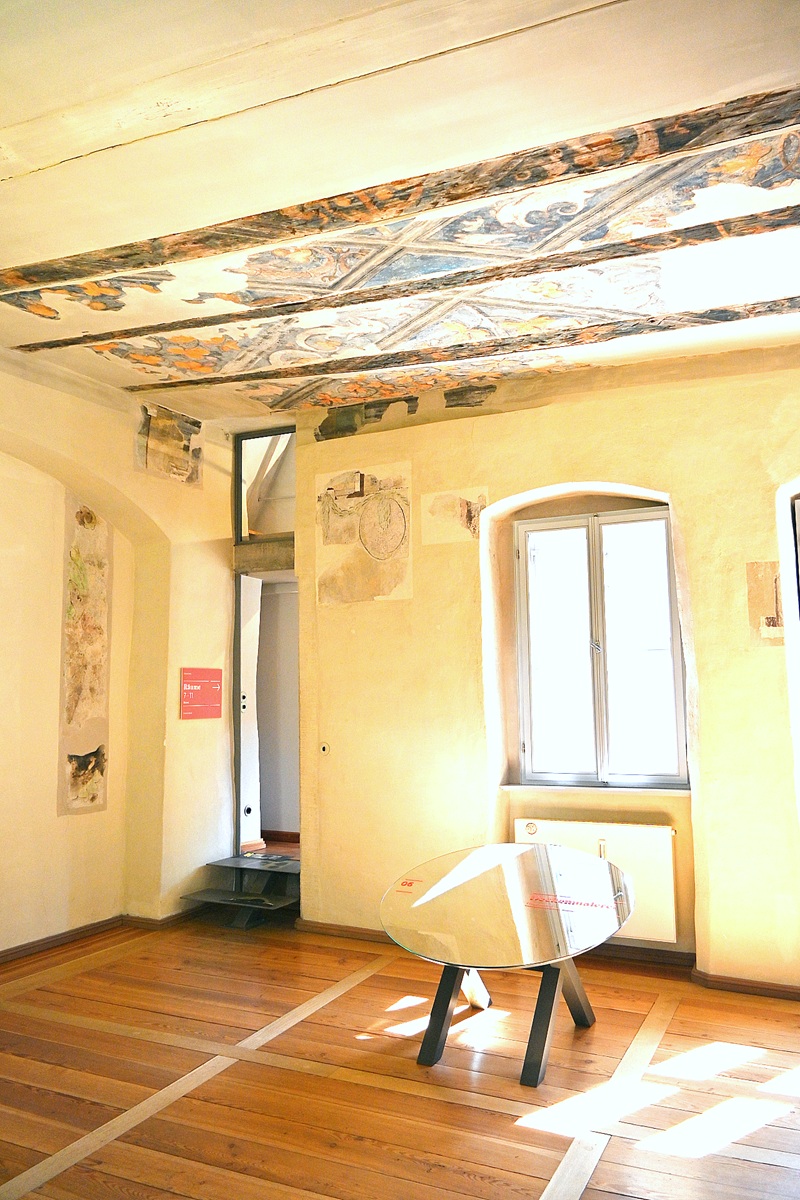
For your afternoon, make sure to visit the Cranach Museum and foundation Cranach Stiftung at Markt 5. This former home of the Cranach painter family has been extensively restored and contains a well-curated exhibition on the family’s life in Wittenberg. My visit was very engaging, not only because of the many information boards but also because of the house itself. It features beautiful Renaissance ceiling frescoes and a strong sense of old German charm. The house at Markt 5 was Cranach’s main residence and extends around a courtyard.
In 1505, Cranach did not only come to Wittenberg to become the major painter of the Reformation, but he also ran several businesses, helping to enhance Wittenberg’s status and cement its reputation as a printing and publishing centre. He also ran a vineyard and a pharmacy nearby, which is still in service today, bringing in supplies such as rare pigments to Wittenberg, sometimes from as far as Antwerp. Cranach also ran his own printing workshop, which employed many locals.
A ticket to the museum exhibition costs 8€.
Don’t get confused: it was fairly uninspiring but fashionable to name offspring after their fathers with the creative suffix “the Younger”. So for Cranach, you have Lucas Cranach the Elder and Lucas Cranach the Younger. Oftentimes, their painting styles were similar too, and it is not always 100% clear who created which painting. The same naming tradition can also be found with the Brueghels.
Cranach Courtyard – Workshop and Pharmacy
Just a few metres away from Markt 5, you’ll find Cranach’s other business site at Schlossstraße 1. The workshop is still in use today, which makes it one of the most remarkable living links to Renaissance craft traditions in Wittenberg. Wittenberg was one of the early European towns where art, religion, and early printing technology intersected in a single workshop ecosystem, something very rare for its size at the time.
The courtyard itself is very charming, with a bronze statue commemorating Cranach as its centrepiece, creating a quiet but atmospheric space in the middle of the old town.
There is also a stone sculpture featuring Cranach’s emblem, the winged serpent with a small crown and ring in its mouth. This symbol functioned as a kind of workshop signature and was used as a mark of authenticity on his paintings and prints, similar to an early form of branding. It helped identify works produced by his workshop, which was essential at a time when production was increasingly collaborative.
What makes this courtyard especially interesting is that Cranach’s workshop was not just an art studio but a full production hub. Paintings, woodcuts, and printed material were created side by side, often involving apprentices and collaborators, which explains why his visual language became so widely recognisable across the Reformation period.
Another random fact: Wittenberg is often called the “cradle of the Reformation,” but it was also one of the first places in Germany to actively use printed propaganda on a large scale. The Cranach workshop didn’t just produce art, it helped mass-produce Reformation messaging through prints and pamphlets, which was extremely modern for the 16th century.
Visit to the Biscuit Outlet Wikana – Special Souvenir
Remember Kaffee & Kuchen time? If you want to take home your own sweet souvenirs, take a walk to the biscuit factory Wikana. The factory and outlet is only a 10-minute walk from the Schlosskirche.
Wikana was one of the most successful biscuit producers in the GDR and, like many East German companies, had to reinvent itself after German reunification in 1989, when Western brands such as Bahlsen and Leibniz became dominant in the market. What makes Wikana interesting is that it not only survived this transition but managed to re-establish itself as a stable, modern manufacturer rooted in tradition.
Today, Wikana produces around 5,000 tonnes of biscuits per year and operates as a solid mid-sized company with roughly 80 to 120 employees. Its annual turnover is estimated at around 12 to 16 million €, reflecting a steady, quietly successful business rather than a mass-market giant.
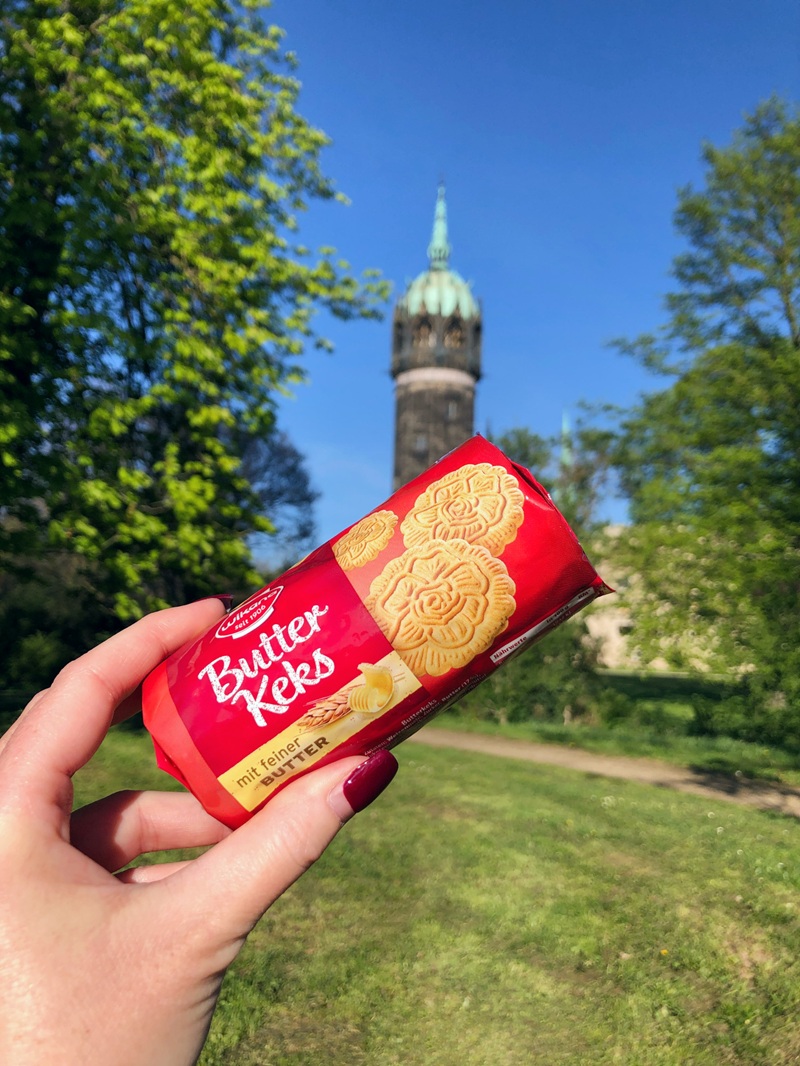
The signature product is a butter biscuit stamped with the Luther rose, a subtle nod to its Wittenberg heritage and local identity. You cannot visit the production facilities, but you can shop at the factory outlet at very affordable prices, and there is even a café on site.
Early Evening – Free Walk along the Former City Wall
For your final activity in Wittenberg, use the early evening for a stroll along the former city wall. This walk will lead you through some of the most serene parts of Wittenberg. The town is already very charming, but when you explore some of the surrounding neighbourhoods and streets, you’ll fall even more in love with its characterful vibe.
There are small parks, romantic ponds, and well-preserved residential houses with listed heritage status. The path is well maintained and easy to follow, and it is also accessible for visitors with reduced mobility.
Plan to spend around two hours here, then take the train back at around 8pm.
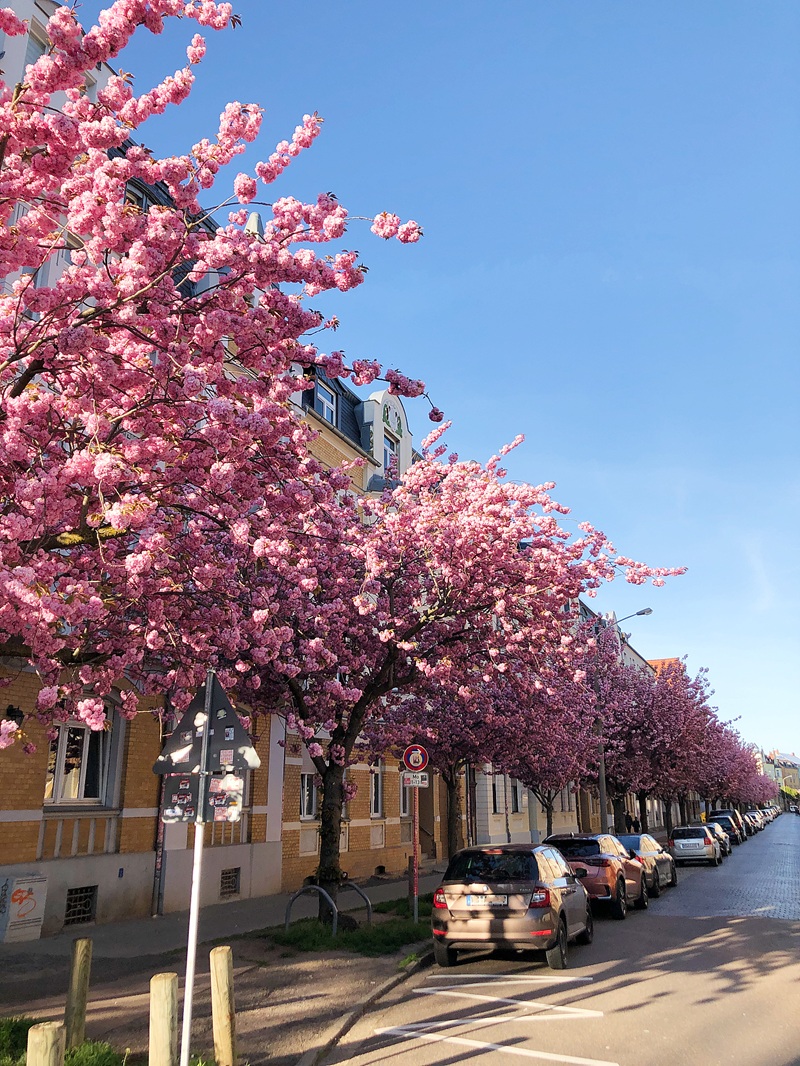
Making of “10 Things to do in Wittenberg Germany”
- Travelled to Wittenberg on my own expense
- Researched onsite & online
- Visited sites on my own expense
- Processed information and impressions for this free travel guide to Lutherstadt Wittenberg
- Created and edited my own photography
FAQs on 10 Things to do in Wittenberg Germany
I understand this is quite a lengthy post and you may have some quick questions about whether visiting Lutherstadt Wittenberg in Germany is worth your time. You can, of course, always come back to any section of my free travel guide and read in more detail what you’d need for your travel plans. As always, if you have questions or need help, please get in touch and I’m happy to assist.
Is Lutherstadt Wittenberg in Germany worth visiting?
Yes, it is one of those smaller towns that is packed with historic significance, art and a very local atmosphere. If you value lesser known towns that engage your various interests than Wittenberg is for you. It is not just easy to reach but also walkable, picturesque and authentically German.
How easy is it to get to Lutherstadt Wittenberg in Germany?
Super easy, if you travel by train there are hourly services from Berlin with a direct connection. The journey takes about 1h.
Is a day trip to Lutherstadt Wittenberg in Germany expensive?
When you plan for a day trip from Berlin to Wittenberg, most of your travel budget will be spent on a train ticket (around 25€ per way). The touristic offering onsite is very affordable with churches asking for a small contribution and the Cranach House at 8€ per ticket. Food might be on a higher level, since Lutherstadt Wittenberg enjoys a positive reputation due to its historic significance, so don’t be shocked when the prices for food do not reflect a small town budget. Coffee costs 4€, food around 20€, ice cream in various parlours sit around 7-10€ per cup.
Thank you so much for reading. If you enjoyed the post and would like to support my blog & research, you can do so via Buy Me a Coffee.
Till next time,
Carolin
Enjoyed my FREE travel guide with 10 Things to do in Wittenberg Germany? You may also like:
- The Gorlitz UNESCO Application and its long Journey
- FREE Leipzig City Guide For First Time Visitors
- Beautiful Bike Tour on the Ecumenical Pilgrimage Route in Germany
- Visit Gorlitz – an authentic fairytale town in Germany
- What Happened to The Devil’s Bridge in Germany?
- Zwolle Calling! A Charming Day Out from Amsterdam


6 Comments
Mitch
6 May 2026 at 10:38 amI didn’t know much about Wittenberg before reading this post but you have made me want to visit. It looks delightful! I love that you can see most of it in a day and also how walkable it is. We would definitely want to climb the Schlosskirche and marvel at the view from the top. And we’d have to visit Stadtkirche for its history. We’re not familiar with the works of Cranach but love discovering art and especially woodcuts and engraving. Thanks for a fantastic introduction to a fascinating looking city.
Mark's Meanderings
8 May 2026 at 1:24 pmThank you for bringing Wittenberg to my attention. A place I never heard of which is surprising considering the historical elements. Fascinating to know of Luther burial. This is a day trip from Berlin I would certainly be booking.
Lyn (aka Jazz)
9 May 2026 at 5:41 pmI am delighted with this introduction to Wittenberg. I am a fan of the Cranach family and would thoroughly enjoy exploring the workshop. This guide plans a perfect day trip. The Reformation history and seeing the bronze of Luther’s 95 Theses would be a highight. I would definitely be climbing the Schlosskirche for the views and to work off the calories consumed in biscuits.
Alison
13 May 2026 at 12:50 pmWell this looks a lovely place for a day trip. I bet it’s gorgeous in the winter too. Count me in for a walk along the old city walls and a shopping spree to take home some biscuits. I haven’t visited enough of Germany but I’ll be adding Wittenberg to my wish list for sure.
Jan - Flying Baguette 🥖🪽
15 May 2026 at 5:26 amI like visiting towns where it makes me feel that I am the only foreigner (or the exotic one, aside from the Indian cuisine you had for lunch) in the area. Wittenberg seems to have that appeal. A quiet town with a very local experience and vibe. I have not heard of Wittenberg, and that only shows that I need to keep exploring German towns that are away from the crowd. #𝗳𝗹𝘆𝗶𝗻𝗴𝗯𝗮𝗴𝘂𝗲𝘁𝘁𝗲
Emma
18 May 2026 at 4:57 pmWhile I’m not German I feel I’m going to need to adopt Kaffee & Kuchen for my own little ritual – something I could definitely get behind. What a charming town, so walkable, and such nice little streets. The schlosskirche tower view is lovely. It’s also so nice that Wittenberg is so easily accessible from Berlin by train, replacing the busy big city with a quiet small town in only an hour. I’ll have to look at visiting on my next trip