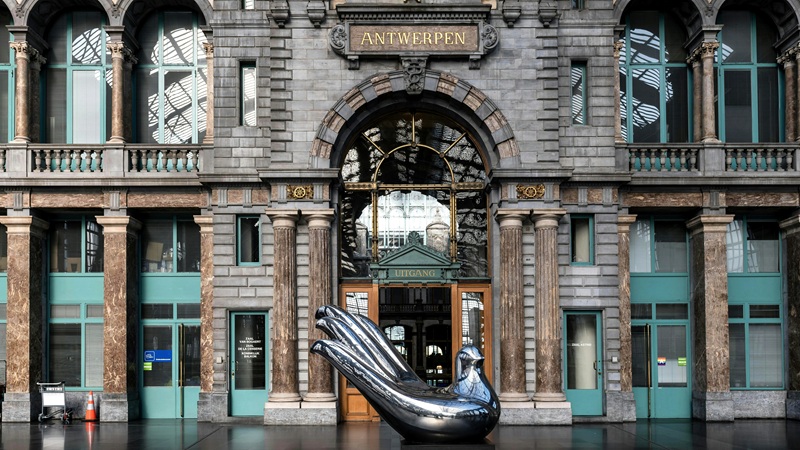
Antwerp is a city with many different sides to explore and plenty of lesser-known places to discover. Het Steen, Grote Markt, Vlaaikensgang, Rubenshuis and the Cathedral of Our Lady are classic Antwerpian sites, but if you’ve already ticked off the main attractions, you may be looking for more underrated experiences and “hidden gems”. You’ve come to the right place. Let’s take our knowledge of Antwerp to the next level as I share some activities that go beyond the standard tourist trail.
For this post, I have chosen activities and experiences that are accessible all year round. There are a few exceptions towards the end which may require some extra planning or resources, but in general, my curated list of unusual things to do in Antwerp should be easy to explore for yourself.
Cover Picture: Wolfgang Weiser | Pixabay
Stock images will be replaced as soon as I have created my own material
Unusual Things To Do in Antwerp from Inside
There is a whole secret Antwerpian world to discover inside some of the city’s most obvious buildings, while others are tucked away behind façades or hidden within backyard courtyards. Some are right there in plain sight, whilst others are easy to walk past without ever realising what lies beyond.
Merchant Houses
Free & Paid
Antwerp’s wealth was built on trade, and some of the city’s most impressive reminders of that history can still be visited today, although often in rather unexpected ways.
Osterrieth House
Free
One of Antwerp’s grandest merchant houses is right in the middle of the Meir. The Rococo Osterrieth House was remodelled into its present form in 1749–1750 for Régine Thérèse van Susteren-du Bois, to designs by Jan Pieter van Baurscheit the Younger. Almost 125 years later, in 1874, the house was acquired by Jacques Ernest Osterrieth, a wealthy German merchant who had settled in Antwerp and built up a successful leather and hides business.
The Osterrieth family subsequently left its own mark on the complex. In the 1890s, architect Joseph Hertogs carried out extensive alterations and embellishments, including work on the house and its buildings along Eikenstraat. By the 1930s, however, the historic building was under threat of demolition. A financial consortium wanted to replace it with a modern apartment building, but the plans helped trigger its protection as a monument in 1939.
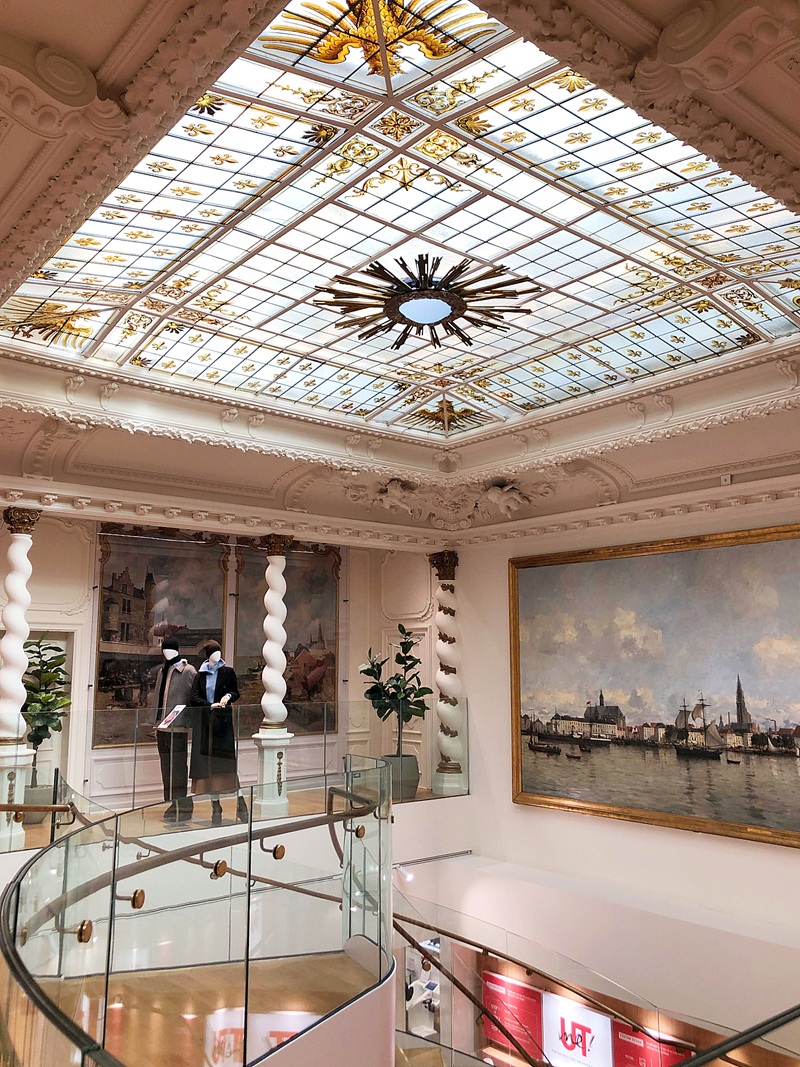
The building later acquired yet another chapter in its history when it became part of the Bank van Parijs en de Nederlanden. Further extensions were made in 1955–1956, and the complex subsequently went through another major restoration between 2015 and 2018. The restoration adapted the building for shops, offices and residential use, while also adding glass and steel coverings over the two former courtyards.
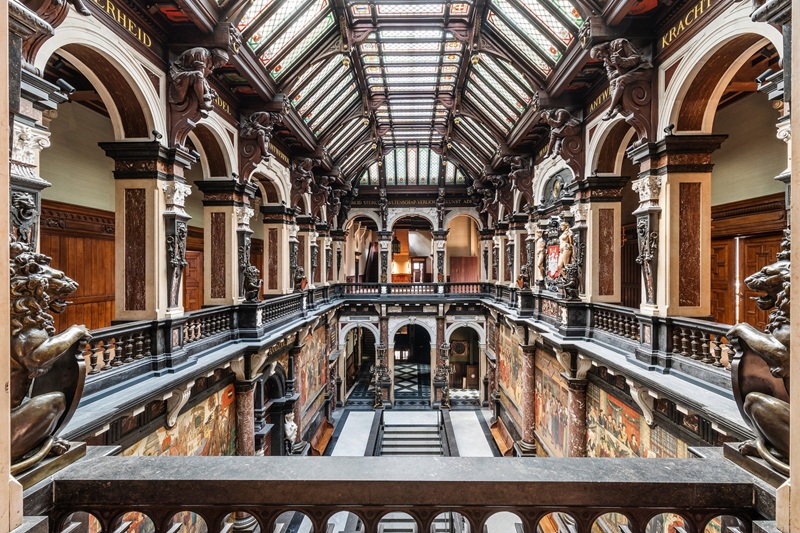
Regardless of all these changes, the house is stunning. From the generous atriums to the opulent fireplaces, there is plenty to admire, but the absolute highlight is the art gallery on the top floor, with its glass ceiling and elaborate stucco columns.
And this is precisely why it belongs on a list of unusual things to do in Antwerp: you can step inside a protected 18th century merchant house without booking a heritage tour and experience its extraordinary interior as part of an ordinary visit.
Did You Know? The building also offers an interesting glimpse into Antwerp’s long-standing connections with the German merchant community. German merchants and families played an important role in the city’s commercial history. One particularly visible example can be found right on the Grote Markt: the Brabo Fountain was financed by the wealthy family of the Nottebohms, who also donated the Nottebohmzaal to the Conscience Library.
Want to explore Antwerp’s German heritage further? Das Kulturforum organises a guided walking tour focusing on the city’s German Quarter.
Paleis op de Meir
Free
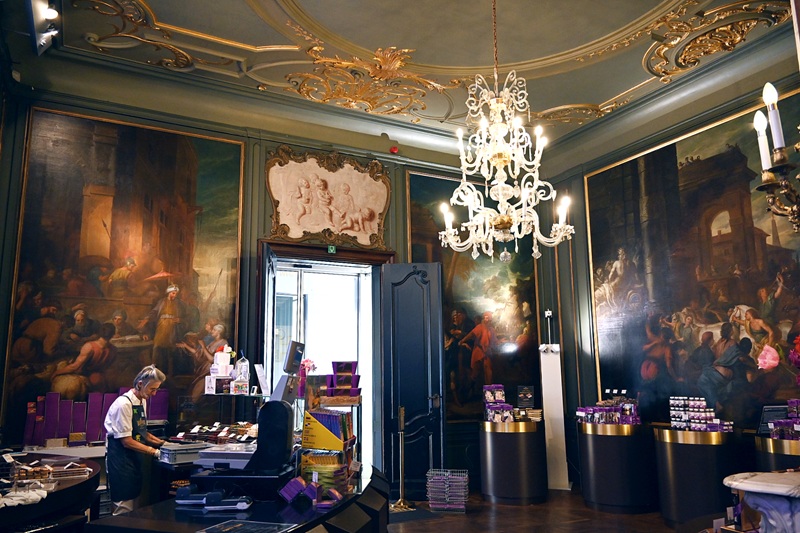
Just a few metres further along the Meir stands the magnificent Paleis op de Meir, built in the 18th century and later used by Napoleon. Unfortunately, you cannot simply wander into Napoleon’s state rooms, as these are reserved for exclusive events. However, it is worth taking a look inside the building when passing by: the former palace is now home to a chocolate shop, giving you an excuse to see at least part of the exhuberant interior.
De Hofkamer
Paid 8€
And then there is De Hofkamer, which really is wonderfully obscure. Hidden behind Den Wolsack near the Grote Markt, this 18th century reception house was built in 1772 for merchant François Van den Bogaert.
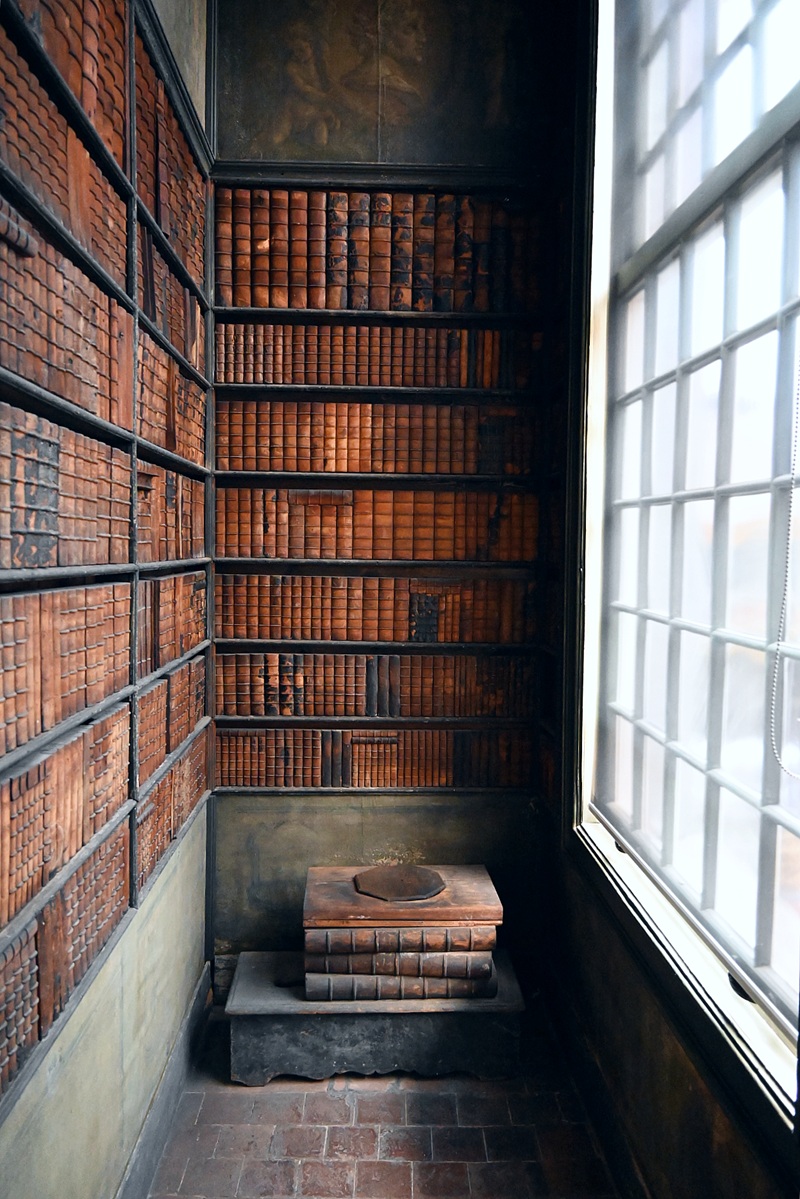
It may only consist of a handful of rooms, but each one has something unusual to discover, from the grand reception room and its enormous ceiling painting to the library’s rather memorable toilet and the attic with its clock tower. The entrance ticket is only 8€, and opening hours are limited, so check before you go.

The Courtyard behind Godshuis Bontwerkersplaats
Free
Hidden behind an unassuming blue door at Wolstraat 37 is one of Antwerp’s most intriguing former almshouses. The Bontwerkersplaats was founded around 1425 by the guild of furriers to provide accommodation for its sick and impoverished members and their widows. A chapel dedicated to St Jodocus followed around 1450.
The former godshuis was dissolved and sold in 1777, and the little houses eventually became privately owned. Today, a quaint courtyard surrounded by 13 small houses remains, complete with a historic stone pump in the centre. The buildings have been altered over the centuries, with some retaining 17th century elements, but the intimate layout still gives you an idea of how this early form of social welfare once worked.
The entrance itself is worth a look, too. The blue-stone Louis XIV-style gateway dates from the early 18th century, although it was only installed here in 1931 after being salvaged from another building in Antwerp.
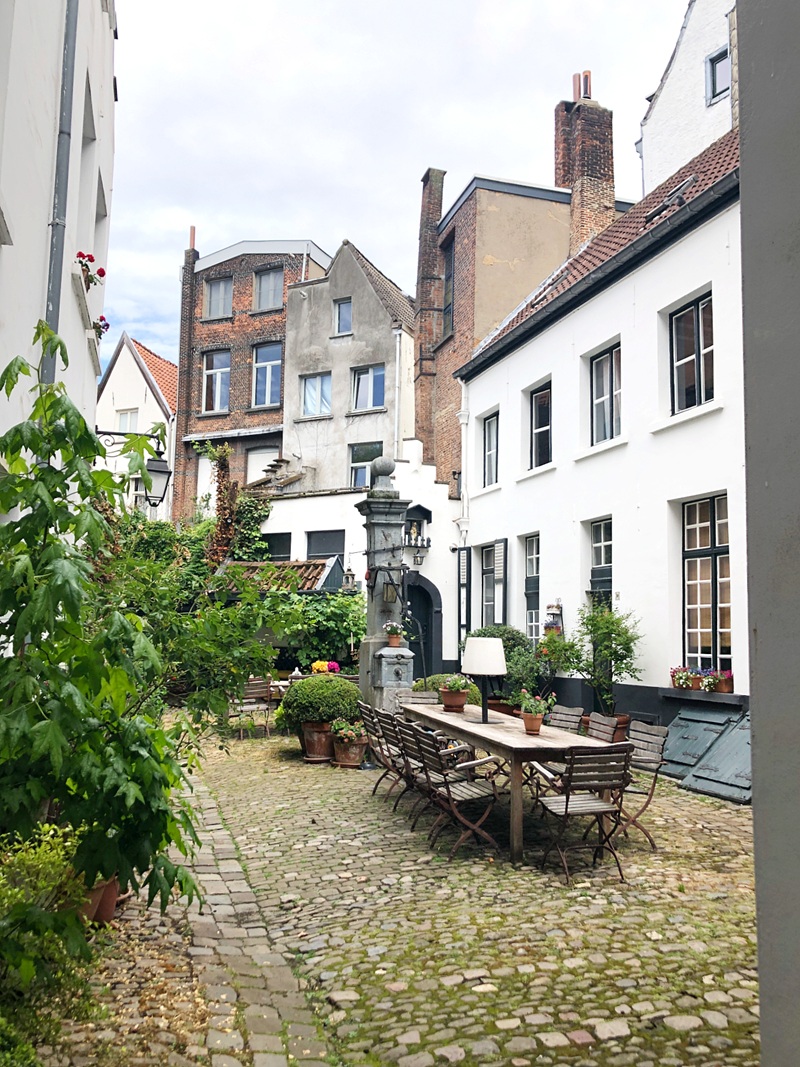
Please be respectful: This is a residential courtyard, so if you have a look inside, please keep your visit brief and quiet. The residents are kind enough to share this little piece of Antwerp’s history, so please respect their privacy and do not linger.
Den Doorenboom
Free
One of Antwerp’s oldest surviving houses is hiding in the courtyard of Hotel FRANQ. Den Doorenboom dates from 1629, although its name is recorded at this location as early as 1392. The tiny house has just two rooms, one on each floor, with original wooden beams, Delft-blue tiles and other historic details still preserved.
What makes Den Doorenboom unusual is its history. The house once stood beside a little alley leading towards the Sint-Carolus Borromeuskerk. This was the route used by poorer churchgoers, while the wealthy residents of Kipdorp had their own more prestigious entrance to the church.
The house nearly disappeared during Antwerp’s demolition frenzy of the late 1960s and early 1970s. Fortunately, Count Daniël Legrelle, a banker and city councillor, decided to have the ruin restored instead.
The charming cottage has even had a rather unexpected second life as a speakeasy. Hotel FRANQ has hosted Prohibition-style evenings in and around Den Doorenboom, with guests needing a secret invitation and password to get inside. It is a wonderfully fitting use for such a hidden location, even if the speakeasy itself is a modern creation.
Please Note: Den Doorenboom is part of Hotel FRANQ and sits on private property, so you cannot simply walk in and visit it like a museum. I suggest politely asking at reception and, if access is granted, making sure you do not linger for too long.
Belfry Climb, City Hall & Free City Museum
Free | Paid 16€
Antwerp’s City Hall and Belfry are both UNESCO certified and are visited separately. The Belfry can be climbed on a guided tour organised by Het Vleeshuis only, while the City Hall offers several different guided visits throughout the year. Both require some planning: tours are limited, summer dates are particularly popular and tickets can sell out fast.
There is also a free exhibition on the ground floor of the City Hall. It explains Antwerp’s urban development and its UNESCO status, with displays covering the City Hall, the Belfry and its famous glockenspiel. So even if you don’t have time for a guided tour, you can simply walk in and learn more about the buildings you are looking at around the Grote Markt.
The Belfry tour is organised by Museum Vleeshuis and offers the chance to climb the historic tower of The Cathedral of Our Lady. An opportunity that is rare and not always accessible. I actually had a ticket for this, but had made the mistake of scheduling it after a full day at the Fashion Festival. By the time I was supposed to climb all those steps, my legs had officially resigned. Bugger!
The City Hall is a little more flexible. Guided tours are offered sporadically outside the main season and more frequently during summer, with different tours allowing you to explore either the building as a whole or particular sections. These include the Luxurious Floor, with its historic ceremonial rooms and interiors. Tours can be booked via Stadshuis Antwerpen.
Unusual Things To Do In Antwerp: The Former Military Landscape
Antwerp nerds may have noticed the extensive forts in and around the city. This is no coincidence. Antwerp had an extensive system of fortifications, but there is surprisingly little material about it onsite or in book form, so you often have to consult the internet to find out more.
Bastei and Former Fortresses
Free & Paid For
Antwerp used to have an extensive defensive system of city walls, bastions and forts. You may remember that Antwerp demolished its city walls from 1864 onwards, around the same time as Vienna, to create more space for the expanding city and a new boulevard system, the so-called Leien.
Like Vienna, Antwerp turned its obsolete fortifications into grand new urban boulevards. The former moat was filled in and the area where the Spanish Walls had stood was transformed into the Leien between 1867 and 1869:
Amerikalei → Britselei → Frankrijklei → Italiëlei
But some of the archaeological remains of the Spanish Walls are still literally underneath the Leien. The entrance is through the parking access on Frankrijklei, opposite the Donum interior shop. I know this is a bit odd, but trust me. Look for the glass box at the end of the tram section, next to the ‘Nationale Bank’ tram stop. Get in and take the lift down to Level -3. Then walk to the other side, where you will see an educational section dedicated to the Keizersbastion.


This is not simply a few stones behind a glass panel. The Keizersbastion was one of nine bastions forming the 16th century Spanish Wall, built under Emperor Charles V. When it was uncovered during the redevelopment of the Leien in 2003, its archaeological and architectural importance led to an unusual rescue operation. The bastion could not remain where it had been found because of the new tunnels and underground car park, so the structure was cut into around 200 blocks, each weighing about three tonnes, and temporarily stored. In 2006, it was reassembled six metres below its original position on level -3 of the car park. The traces of this extraordinary relocation were deliberately left visible.
The public area around it has information panels, display cases and a large floor map showing the Spanish Wall over the layout of present-day Antwerp. You can also look through the glass at the actual archaeological remains of the bastion and the foundations of the former Keizerspoort. The Keizersbastion itself is particularly interesting because of its unusual half-pyramid shape, an example of the distinctive stonework used in Antwerp’s 16th century fortifications.
Guided tours are possible, and I am going to try this out next time I am in Antwerp. I have requested more information from the city and will update accordingly.
Unusual Things To Do in Antwerp: Seasonal Events
There are cultural and unique events happening in Antwerp all year round, and I have been lucky enough to take part in a couple of them, such as Antwerp Fashion Festival, The Circle rave, Coffee Week and, more recently, Zomer van Antwerpen. Those events are an excellent way to enjoy unique local experiences in Antwerp and create a personal bond with the city.
Zomer van Antwerpen
Free
The summer season in Antwerp ran two great initiatives that I loved during my summer holidays in 2026. Taking part in this unique thing to do in Antwerp made my summer.
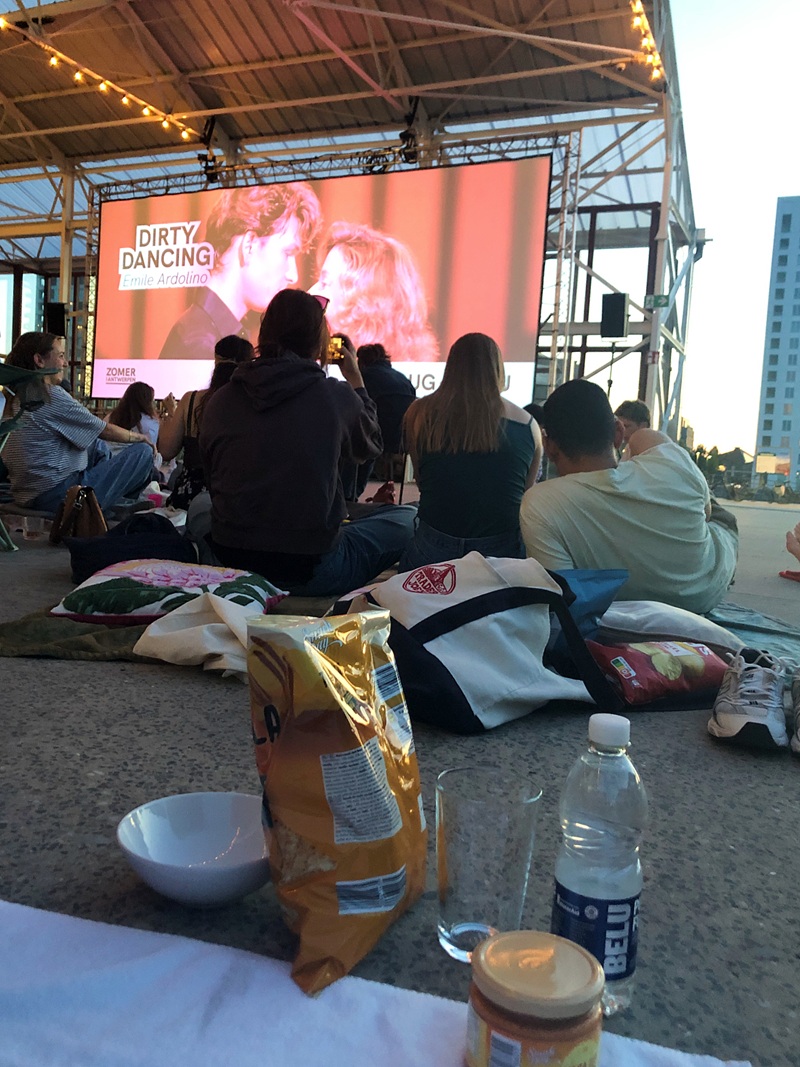
Zomer van Antwerpen is a cultural offering including free open-air cinema at Kattendijkdok, local art displays and community events. It is actually a much broader festival, with theatre, circus, music and other events taking place across the city. In 2026, the festival ran from 18 June to 30 August, with a large part of the programme completely free.
It was such a vibe! Every evening there was a free film showing and, since the nights were warm and balmy, watching a movie under the stars at Kattendijkdok was my highlight at the end of the day. I grabbed a towel from the hotel, packed my Albert Heijn bag with snacks, drinks and food and then did a pilgrimage every evening to the dok. Locals arrived by bike with their foldable chairs under their arms. The atmosphere was always friendly, and watching the film together made my summer.
The Swimming Session at the historic Bonapartedok at the MAS
Napoleon ordered the construction of the dok in 1803 as part of his plans to turn Antwerp into a major military port, and it was opened in 1811. Today, you can actually swim in it, which I think is a pretty unusual thing to do in Antwerp and experience its history.
To be honest, this is a slightly weird experience, since the dok is connected to the Scheldt. When I entered the dok for my timed swimming slot, I was not so sure at first if I wanted to go in. There was sunscreen residue on the water, carp swimming around and a bit of dirt, so yeah not a great first impression. But everyone else was having fun, so I thought, yeah Phuket!?! I got in the water further down the pier and, on one of the hottest days in Belgium, it was incredibly refreshing. The swimming area unfortunately had to close the following week because of a blue green algae alert.
‘t ZwemDok offers both 50-metre swimming lanes and a larger recreational swimming area, with lifeguards supervising the swimming zone. Swimming is free, but registration is required. The dok is between 4.5 and 6 metres deep, so you need to be at least 12 years old and able to swim. Sportoase swimming sessions can be booked online only and go live on every Monday for the weekend spots.

Unusual Things To Do in Antwerp: Ghost Village Doel
Bike Rental approx. 18€
This is one of my favourite things to do when I explore cities in Europe: renting a bike and going beyond the city centre to experience nearby hiking trails, ruins or, in this case, a ghost village.
Another unusual thing to do in Antwerp is to rent a bike (e.g. Cyclant by the station) and explore the harbour past the Havenhuis. Again, there are several forts in the area, as well as a Dutch windmill, small beaches and the ghost village of Doel.
Doel is an interesting place full of history despite its size and supposed emptiness. The area has been settled since the 13th century, but an actual village formed later during the 18th century. The village has a church and a school, which is now used as a community centre. Its stately buildings stand with their façades directly facing the main streets: the presbytery, school, town hall and church. This makes the village a rare example of urban planning.
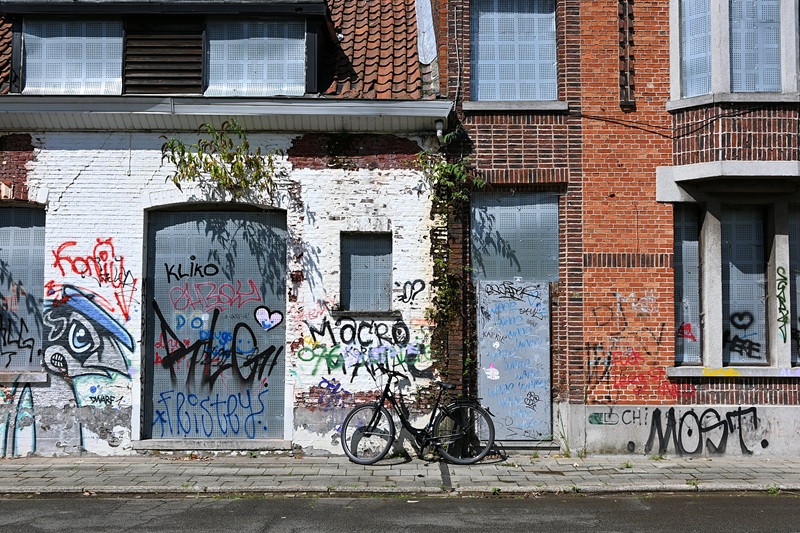
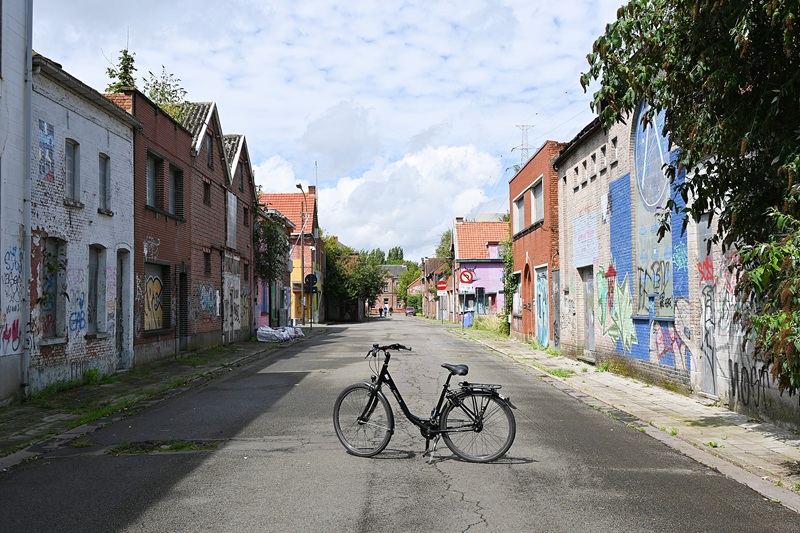
The village is also known for its street art, with murals and graffiti covering many of the abandoned houses. Around the village, you will also find information plates in Dutch providing more background about Doel and its history. I thought this was a nice touch, as it encourages visitors not just to come and snoop around the empty houses and streets, but also to learn more about a village that was once filled with life.
Whilst it is mostly abandoned today and draws cyclists and day trippers like me, the small square by the church is used as a summer terrace with a little bar and self-made outdoor seats. It was actually a lovely afternoon, having a refreshing drink whilst learning about Doel and the expansion of the harbour, which ultimately led to many locals moving away.
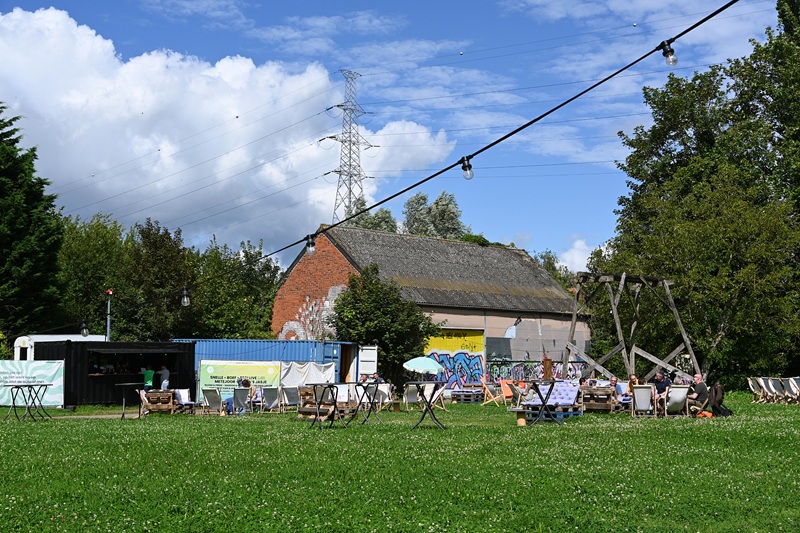
There are still some people living here, so the village “closes” at 6pm and visitors have to return home. However, during the day, Doel is an excellent destination to explore.
For your return, you will have to cycle a 13km detour to the Waterbus stop at Liefkenshoek. It’s a bit annoying since you can see the stop from Doel, but due to a waterway, there is no direct link and you have to cycle around it through the harbour complex.
And 8 Hidden Gems in Antwerp that I need to visit
Antwerp is one of these places that can engage me endlessly, and whenever I visit, I usually leave with a long list of “Next time in Antwerp”, including activities and experiences that I am yet to enjoy.
Letterenhuis
Paid 8€
The Letterenhuis is a museum of Flemish literature and cares for literary heritage. It is a centre for exhibitions, guided tours and activities such as lectures, workshops and book presentations.
I have not visited yet, but I am intrigued not only by its history and very niche focus on literary heritage, but also because, as someone who is herself interested in manuscripts, literature and bookbinding, I hope to come across some rare pieces of information and niche knowledge.
Jozef Peeters Studio Flat in Antwerp Zuid
Potentially difficult to do, but free during Heritage Days
I know about this hidden gem in Antwerp through the upcoming Open Monumentendagen, the European Heritage Days. Jozef Peeters was a Belgian artist and graphic artist who was only active for roughly 20 years. Whilst he attended the Royal Academy of Fine Arts, his attention was less on his studies and more dedicated to his own projects. One of them was his studio flat, which he covered from floor to ceiling in lively colours.
Whilst the tours for the Open Monumentendagen 2026 are all fully booked, I have this hidden gem in Antwerp on my list as this is quite a unique side of the city. I know that Van Gogh also studied art very briefly in Antwerp, but his former traces are reduced to a small plate outside the house where he used to live.
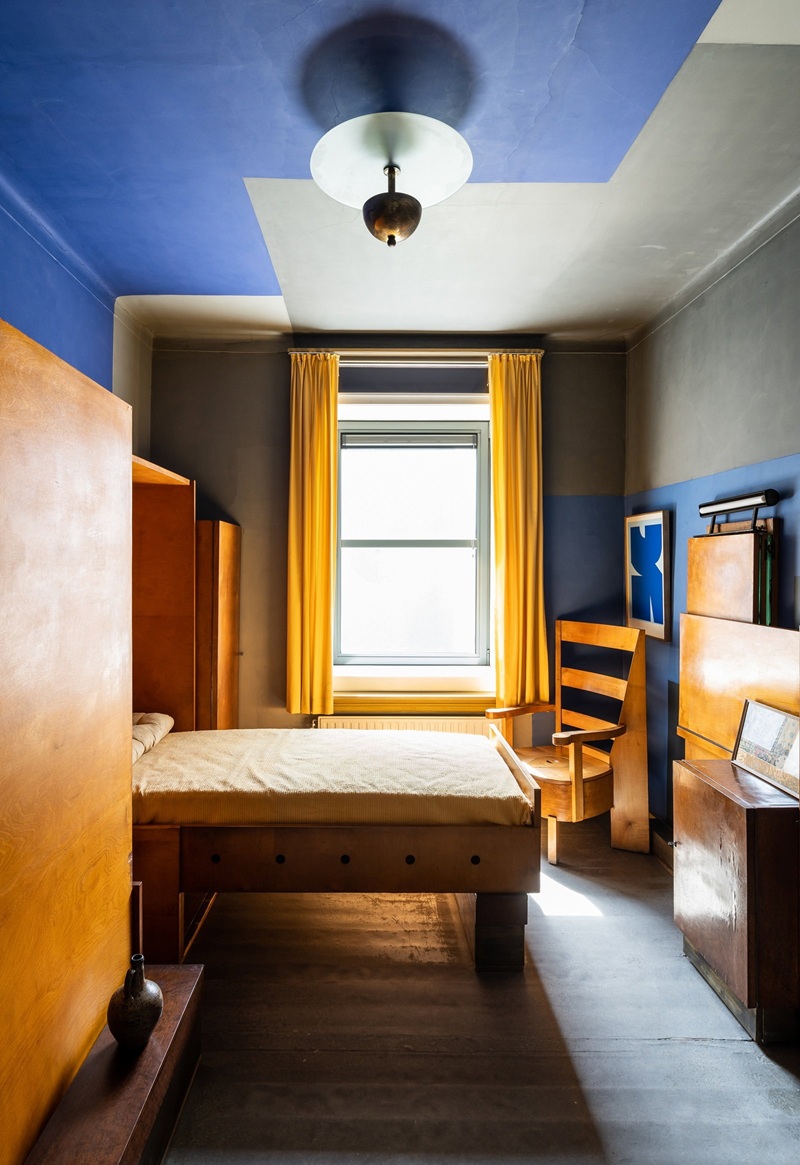
I have not come across Jozef Peeters before, but I am deeply intrigued by his art, work, style and motivation to transform his studio flat in Antwerp Zuid. The apartment is actually much more than a room covered in colourful paintings. Peeters designed the furniture and lighting himself and treated the entire interior as one work of art, with the walls, ceilings, doors and furniture forming part of the same composition. The four-room apartment was both his studio and family home.
What makes it even more interesting is that the flat has survived in remarkably original condition thanks to his daughter Godelieve. She continued to live there for almost 50 years after her father’s death and spent decades promoting his work. She eventually left the apartment and Peeters’ archival material to the City of Antwerp, with the Letterenhuis now responsible for managing them. The interior was subsequently restored, but the aim was to preserve what remained rather than turn it into a modern reconstruction.
Sint Paulus Church
Free
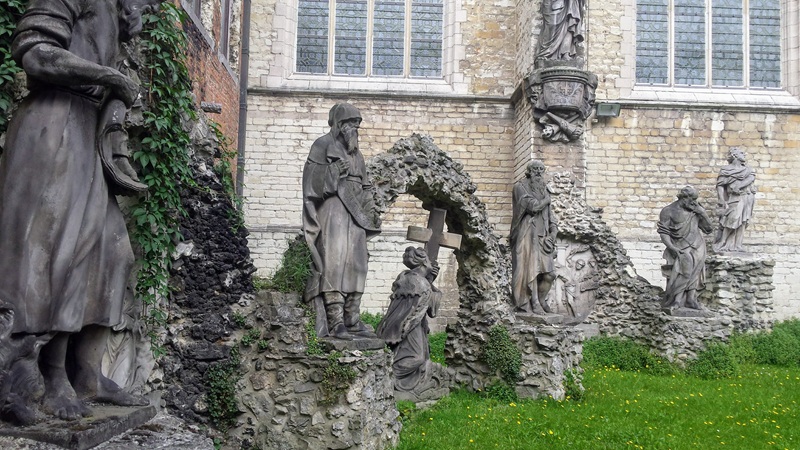
Currently under construction and with irregular opening hours, hence why I have failed to see the Calvarietuin myself. I have, however, been inside the church during the Antwerp Fashion Festival, so this little church in the northern part of the Old Town definitely captures your attention. The Calvarietuin is a spectacular work of art centred around the Passion and Resurrection of Christ.
The garden was created between 1700 and 1741 by several Antwerp Baroque sculptors and was designed as a kind of miniature Jerusalem after pilgrimages to the Holy Land became increasingly difficult. The life-sized sculptures are arranged around a Calvary hill, but the garden also includes prophets, apostles and other biblical figures. The arrangement of the statues even gives it something of an open-air theatre.
Guided Vespa Harbour Tour
Around 145€
There are two activities that I know of, but they aren’t necessarily the cheapest way to explore Antwerp. The first one is a public Vespa city and port tour. It is pricey, but each Vespa seats two people, so if you are travelling with a friend and share one, it becomes considerably more affordable. The tour takes around three hours and takes you into Antwerp’s enormous port, with a guide showing you areas that would be difficult to explore independently. This is probably the biggest advantage of doing it as a guided tour: you can actually get into the working port and learn about what you are seeing rather than simply cycling around its edges.
PAKT Rooftop & Urban Biodiversity
Around 130€
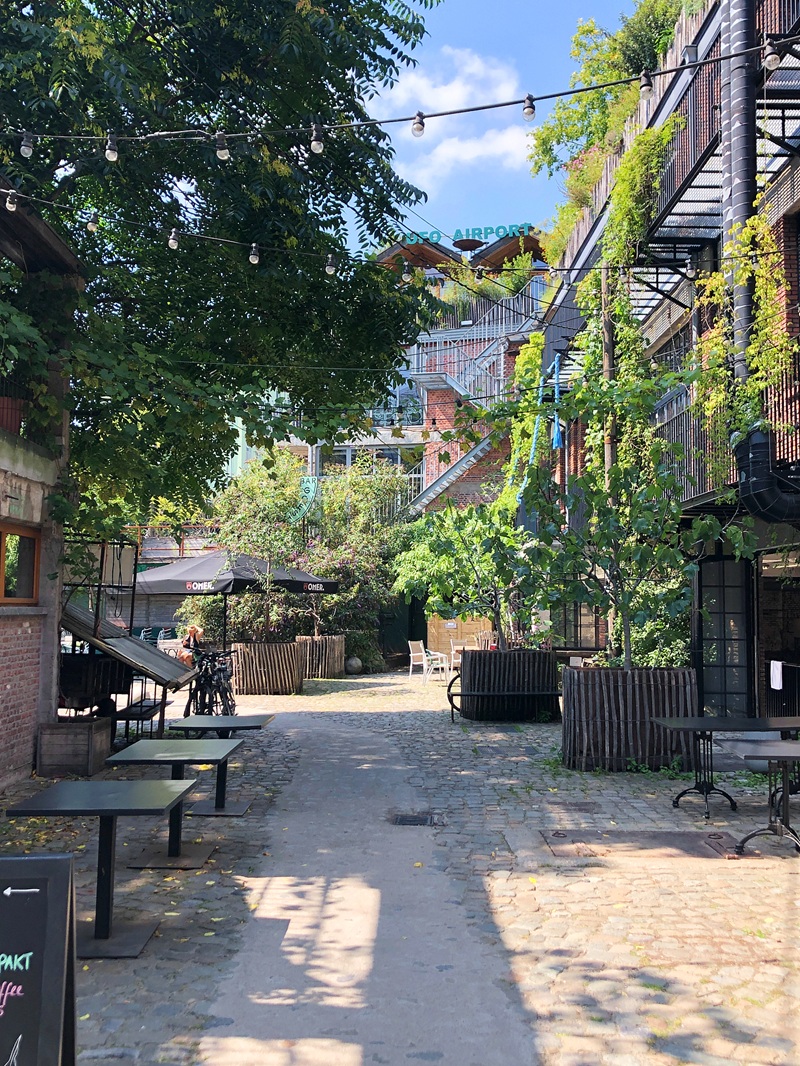
The second spenny experience is a walk on the rooftops at PAKT. Having been interested in biodiversity and engaged heavily with the topic during my many visits to Vienna, where ‘city honey’ has turned out to become a popular souvenir, I researched a little bit for Antwerp and came across the unique experience of visiting the rooftops at PAKT.
PAKT has created a 1,900 m² urban farm on the roofs of its former industrial site, where local farmers grow vegetables, fruit, herbs and flowers making this a very stustainable place directly in the city. Guided rooftop walks take you behind the scenes of the project, including its history, the farmers, the crops, the animals and the challenges of growing food on the roofs.
PAKT is also a good example of how sustainability and urban agriculture are becoming part of city development. This is increasingly interesting for travellers looking for more sustainable and locally focused experiences, and cities such as Rotterdam are already making this a much bigger part of their touristic offering.
Unusual Things To Do in Antwerp: Local Art Galleries
Maybe this is more for travellers than locals, but there are a couple of art spaces that are very high on my list. They are a little outside central Antwerp, though, so visiting them requires some planning, organisation and effort. I have not visited them yet, but they are definitely on my “Next time in Antwerp” list.
Axel Vervoordt Gallery
Not 100% sure, Free
Axel Vervoordt is an Antwerp based art dealer, collector and curator whose gallery is located in the Wijnegem area, just outside Antwerp. The gallery presents carefully curated contemporary art and design, with a strong focus on natural materials and minimalist forms. I came across one of their beautifully produced, high end publications at the Zara Home store on Meir, which made me even more curious to see the gallery itself.
The works and interiors associated with Axel Vervoordt often make use of raw materials such as stone, wood and metal, with a strong emphasis on texture, space and simplicity. The gallery is only open on Friday and Saturday, so this is one of those places where you need to plan your visit rather than simply turn up.
Middelheim Open Air Gallery
Free
Middelheim Open Air Sculpture Museum is probably the best known of these three and is a completely different experience from visiting a conventional art gallery. The museum is set within a large park and combines sculptures with the surrounding landscape, making it possible to spend several hours simply walking around and discovering works along the paths and through the trees. Best of all, admission is free.
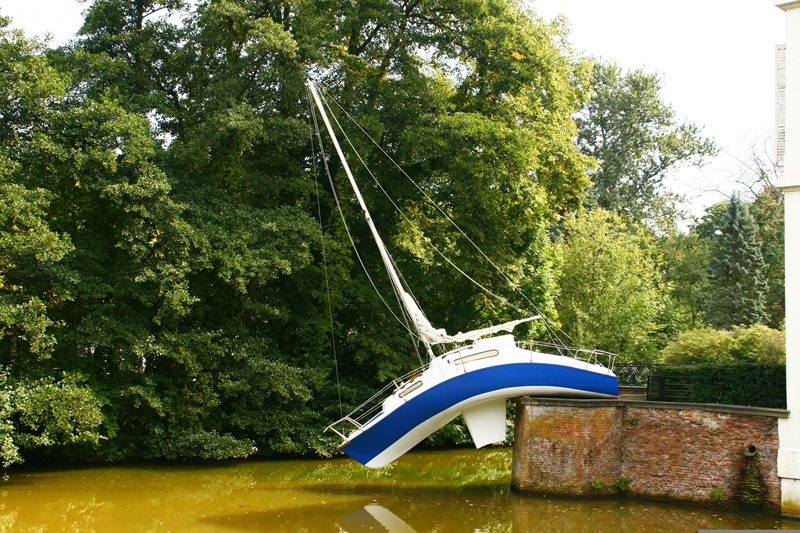
One of the artists represented here is Erwin Wurm, who is known for his unusual sculptures and installations. I already know his work from Vienna, where Hotel Daniel has one of his characteristic distorted boats on its roof, so seeing more of his work in Antwerp is definitely on my list. Middelheim is therefore an interesting option if you want to combine contemporary art with a walk through a large green space.
Verbeke Foundation
Paid 15€
The Verbeke Foundation is another art park that has been on my list for a while, although getting there independently is more of an undertaking. From central Antwerp, the bike ride is around 30 km one way, so this is probably one for experienced cyclists or travellers with access to a car. Maybe one day I will have a car or find someone willing to take me there!
The foundation combines contemporary art with nature and presents sculptures, installations and large scale works across an extensive outdoor site. It is particularly known for its experimental approach and for bringing art together with natural and industrial materials. This is exactly the kind of unusual art experience that interests me, although I will have to make a little more effort to get there.
FAQs about Unusual Things To Do in Antwerp
I understand this is quite a lengthy post and you may have some quick questions about my content on Unusual Things to do in Antwerp. You can, of course, always come back to any section of my post and read in more detail what you’d need for your trip. If you have questions or need help, please get in touch and I’m happy to assist.
How did you choose your activities for this post?
I read a lot and also research onsite. Often, the hidden gems of Antwerp are well guarded and not necessarily promoted by the tourist information at Het Steen. It’s really a case of “I stumbled upon this at this exhibition” and then I fell down a rabbit hole scenario. For example, I discovered the Bastion at the underground car park through the free exhibition at the City Hall. I doubt many locals have actually visited that exhibition.
The European Heritage Days, known as Open Monumentendagen in Belgium, are also a fantastic resource for discovering some really rare and unusual sites.
Does Antwerp have more Hidden Gems?
Absolutely. There’s even an entire book on Hidden Antwerp, which I have not read yet, so I wouldn’t be surprised if there are more hidden secrets, stories and places to see. For example, I have not done De Ruien, Antwerp’s sewer and underground system, taken a Vespa or boat tour through the harbour or seen Rubenshuis. I have an excuse for the latter, since it is currently under renovation.
And then there is the station. Have a look at the east side, which is currently completely closed off. I am 100% sure there is another banquet hall there.
Are these Hidden Gems easy to visit?
Yes. I deliberately chose activities and unusual things to do in Antwerp that can be visited all year round, with the exception of the Jozef Peeters Studio Flat, which has more limited access. For all the other places, you can simply turn up and explore them yourself. A few are located on private or residential property, though, so please be respectful and remember that people live there. In those cases, a polite approach and a short visit are the best way to enjoy these unusual sides of Antwerp.
Thanks so much for reading. If you’ve enjoyed my post on unusual things to do in Antwerp and would like to support my blog & research, you can do so via Buy Me a Coffee.
Till next time,
Carolin
You may also enjoy my other travel content:
- Ultimate Travel Guide with 30 Things to do in Antwerp
- Quick Guide to the Antwerp Coffee Culture
- FREE 1 Day in Antwerp Itinerary For Your First Time Visit
- Coming Up: Antwerp Fashion Festival


5 Comments
Mitch
11 September 2026 at 11:13 amI love that there are so many free things to see in Antwerp and that most of the paid locations seem to have a reasonable entry fee. We haven’t visited but really must. The city is so eclectic – so many different styles of architecture from different eras. Look at all those books in the toilet at De Hofkamer! It’s great to learn that there are so many events here as well. As cinephiles we wouldn’t be able to resist free open-air cinema at Zomer van Antwerpen and we’d enjoy the other events as well. And a speakeasy at Den Doorenboom? Count us in!
Lyn (aka Jazz)
14 September 2026 at 4:50 pmAntwerp was already on my list of cities to explore. Unfortunately I missed it on my last trip to Belgium. I won’t miss it on my next visit! I love the architecture and would thoroughly enjoy simply wandering about. I know I would enjoy the sculpture exhibits, art galleries, and unusual sights you highlighted.
Emma
14 September 2026 at 11:43 pmMy time in Antwerp wasn’t nearly long enough, I’m hoping to go back one day. The merchant houses and quiet neighborhood courtyards are so picturesque, and I love that so many of these things are free to do or cheap. The ghost village sounds really fun and unique, plus a great bike ride to get out there in the nicer weather. I also really like the sound of the summer festivals. Getting back to Antwerp is going to be a must anyway, I need to stock up on good chocolate!
Alison
1 October 2026 at 10:19 pmI love Belgium but haven’t made it to Antwerp yet but am seriously tempted thanks to this post. There are so many things you’ve written about that I’d love to see and do. Cycling to the ghost village would be top of the list – what a fantastic place to explore. I’d love to just wander round and soak in all the stunning architecture too.
Mohsin Ali
2 October 2026 at 12:08 pmGreat list — I especially love that you focused on places accessible all year round, since that’s the hard part with hidden gems. The Keizersbastion under the car park sounds wonderfully bizarre, and Doel has been on my radar for a while. Adding the Letterenhuis to my Antwerp wishlist!